Potato, Patahto
Every fall, when those big 10-pound bags of potatoes go on sale, we stock up. Usually around 200–300 pounds! It’s become a bit of a tradition for us.
We don’t have a cold room or a root cellar, so we had to get creative. The best spot we’ve found for long-term storage is actually our garage. We set up a shelf, stack the potatoes there, and cover them with a sheet to block out light. Keeping light exposure low helps prevent the potatoes from turning green and slows down sprouting.
If you’re looking to get the longest storage life from your potatoes, the secret is simple: cool, dark, and dry is the way to go. With this method, our potatoes typically last until March, when they finally start to sprout beyond saving.

Storing Our Fall Potato Haul
This year, in an effort to reduce waste, we decided to process our remaining potatoes as soon as we noticed their little eyes beginning to sprout. It’s something that usually starts in February and really takes off by March. Rather than let them go soft in the garage, we turned it into a cozy, productive kitchen project.
We spent a few busy days transforming potatoes into all sorts of ready-to-use comforts: golden samosas, pillowy perogies, crispy home fries, creamy twice-baked potatoes, and cubed hash browns. In the past, we also dehydrated sliced potatoes for future scalloped dishes, made both shredded and cubed dehydrated hash browns, and even freeze-dried mashed potatoes (which we personally prefer over dehydrated for the texture). Not wanting to waste a single bit, we also saved the potato starch from soaking all those potatoes, perfect for thickening soups, stews, and gravies later on.
As luck would have it, just as we committed to processing the last of our 90 pounds, potatoes went on sale again for an unbelievable deal - $1.35 for a 10 lb bag! We simply couldn’t resist. By the end of it all, we had processed a grand total of 230 pounds of potatoes. It was a lot of peeling (we did keep the peels on for our home fries and hashbrowns, as potato skins are nutrient-dense and contribute significantly to the overall health benifits of potatos, esecially fiber and certain minerals), chopping, and preserving over a few long days, but the end results were 100% worth it. Our pantry shelves and freezers are now lined with jars and bags of homemade convenience foods, ready to make cozy meals in minutes.

Sorting and Prepping
We began by sorting our potatoes. It might sound a little unusual, but this simple step makes the whole process smoother and the end results so much better.
First, we made a list of the dishes we wanted to prepare this round: home fries, hashbrowns, samosas, perogies, and twice-baked potatoes. We already had plenty of dehydrated sliced potatoes, dried hashbrowns, and potato flakes tucked away from our previous preserving session, so we focused on these fresh favourites.
Next, we opened each bag and sorted the potatoes by size and shape. The nicest big, long potatoes were set aside for home fries because let’s be honest, no one loves short, stubby fries. We made another pile of evenly sized, well-shaped potatoes perfect for twice-baked potatoes. Smooth, easy-to-peel potatoes were chosen for perogies, and the remaining smaller or uniquely shaped ones were reserved for cubing into hashbrowns and samosa filling.
Once sorted, all the potatoes were thoroughly scrubbed and washed clean, ready for whatever came next, through the fry press, into the dicing machine, or on their way to be boiled, baked, or fried. It took a little extra time upfront, but having everything thoughtfully sorted made the entire preserving process feel calm, organized, and wonderfully efficient.
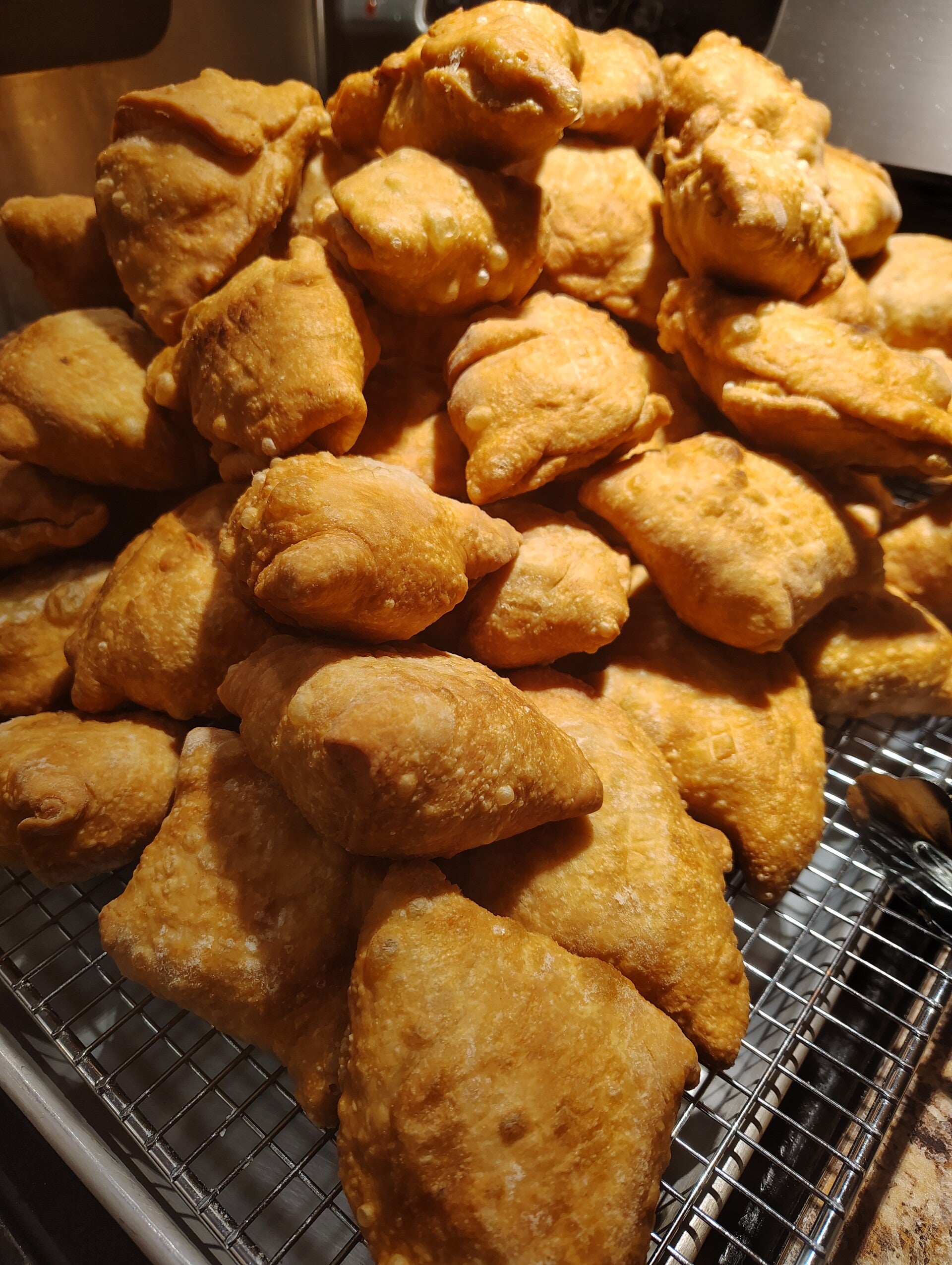
Samosas
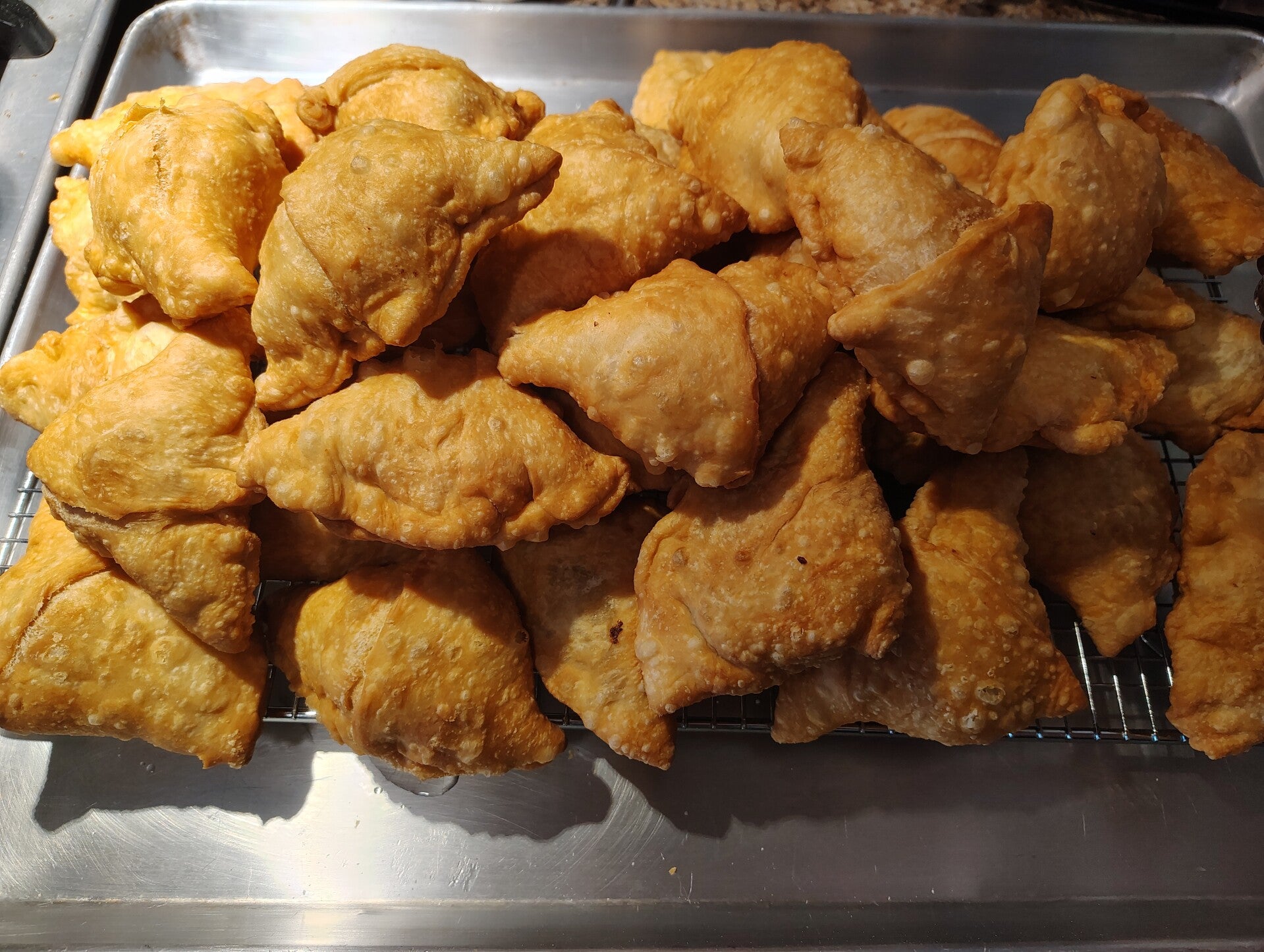
Our family absolutely loves samosas. They are one of those comforting favourites that never seem to last long once they’re made. I’m still on the hunt for the perfect recipe that truly replicates the ones we buy from our local Indian shops; the perfectly spiced filling and that unmistakable flavour we all crave.
That said, this version is still incredibly tasty and, so far, the best recipe we’ve tried at home. The filling is warm and flavourful, the texture is just right, and they freeze beautifully for quick meals later on. While the search for “the one” continues, these homemade samosas have definitely earned a regular spot in our kitchen.
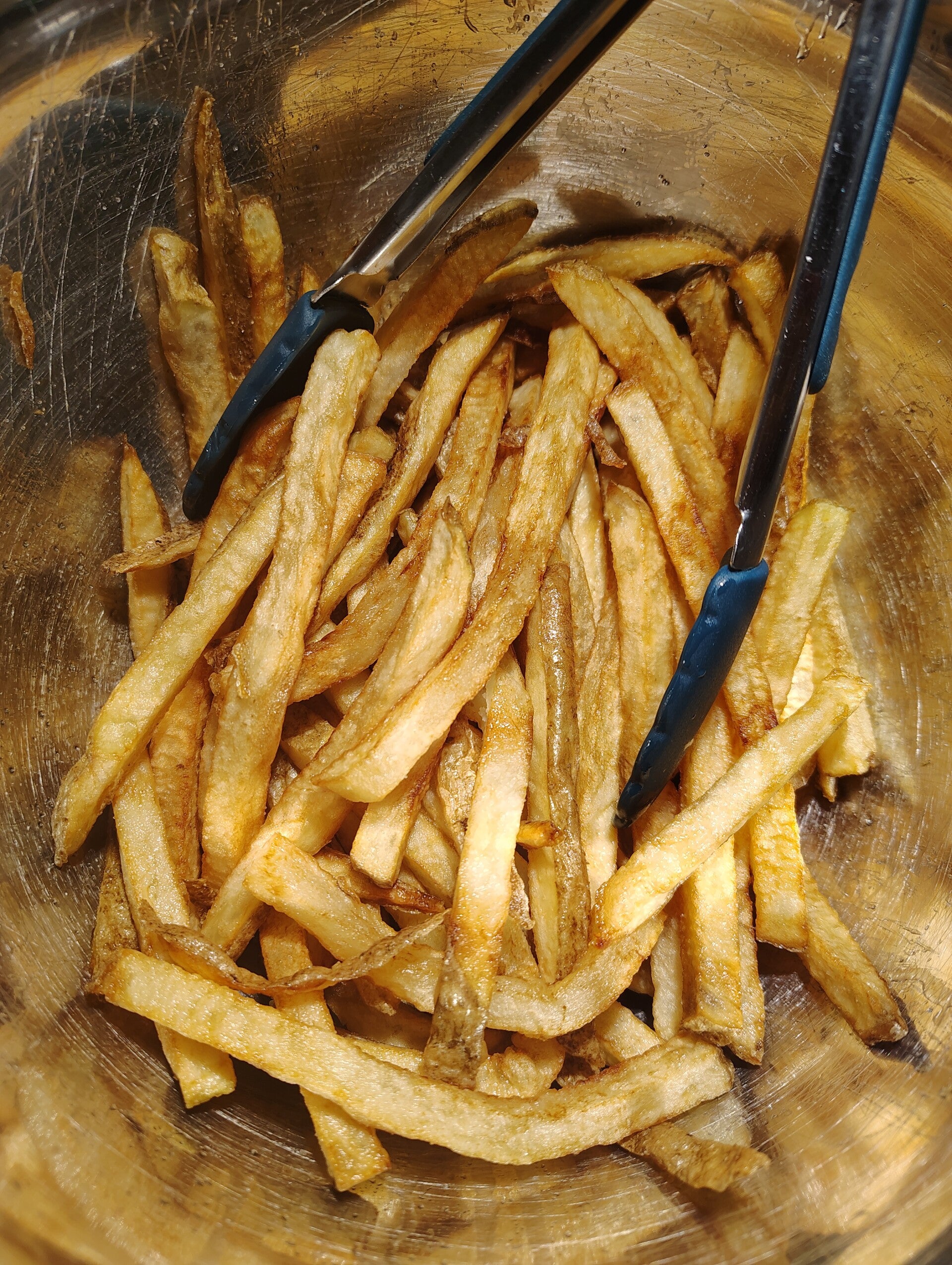
Home Fries
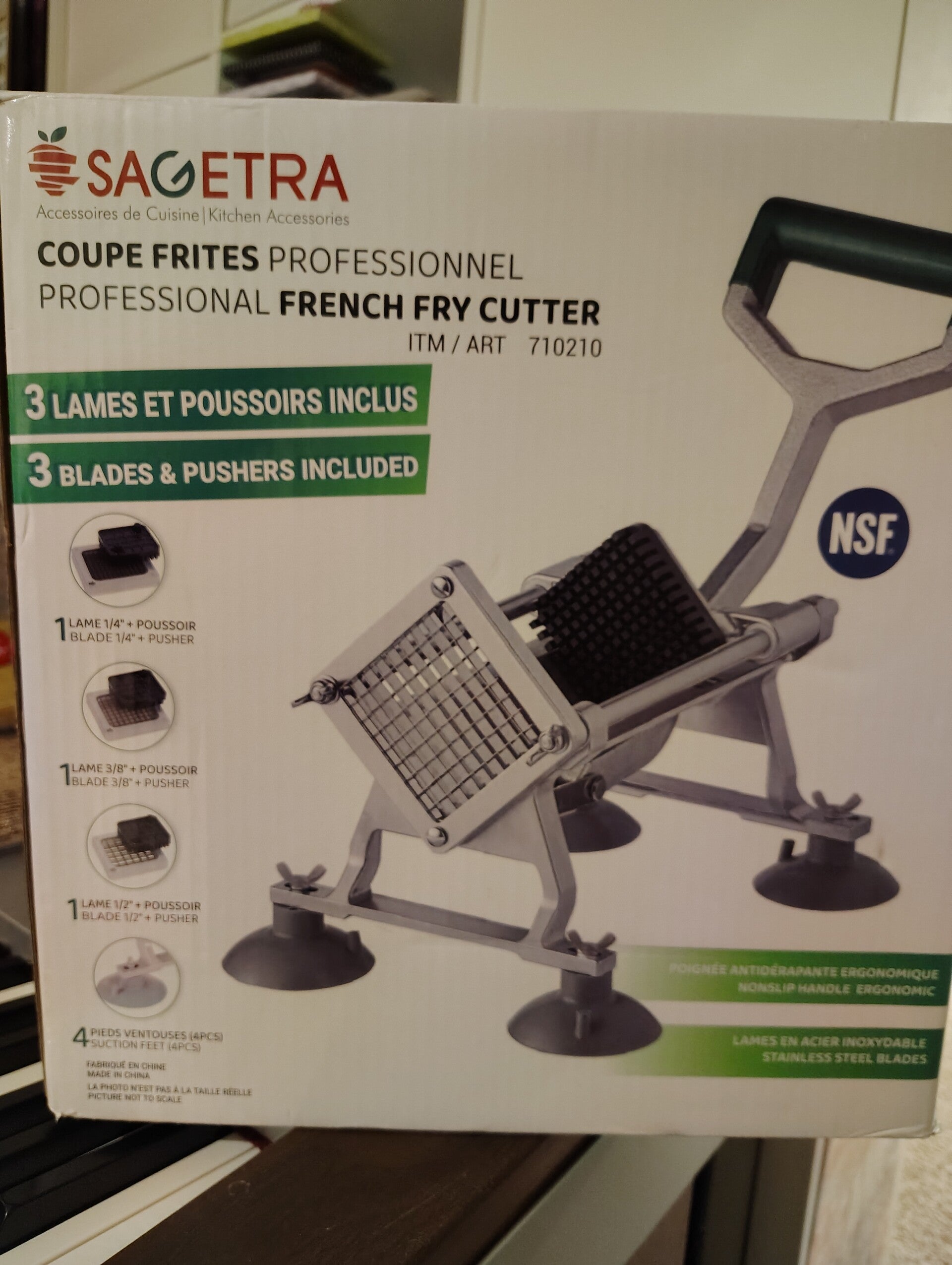
When the pandemic hit, our family made a point of keeping comforting foods on hand to help ease some of the stress and anxiety everyone was feeling. One of those comfort foods was homemade fries turned into poutine. We would buy large 50 lb bags of potatoes so we could make those nice, long fries everyone loves. We even invested in a commercial French fry press after my arm got quite the workout using a V-slicer for batch after batch of potatoes!
The air fryer just doesn’t quite cut it for my kids, they much prefer authentic deep-fried fries, so out came the deep fryer. Making homemade fries always brings back fond memories of my childhood. My mother would make each of us our own batch of fries. With six kids, it took a while, but it was always worth the wait. They were the best!
When prepping fries for the freezer, I first tried blanching them in water, but they became gunky and overly starchy, often falling apart. The water needed changing after every batch because of all the released starch. I researched, watched videos, and tried different methods, but nothing seemed to work quite right.
Then I remembered that my husband had worked in a fry truck as a teenager. I asked about their process. He explained that they would cut all the fries, soak them in water, then blanch-fry them before storing them in the fridge until needed to fill an order. Light bulb moment! I tried blanch-frying instead of water blanching, and they turned out perfectly! Firm, clean, and ready for the freezer without all the excess starch.

Hashbrowns
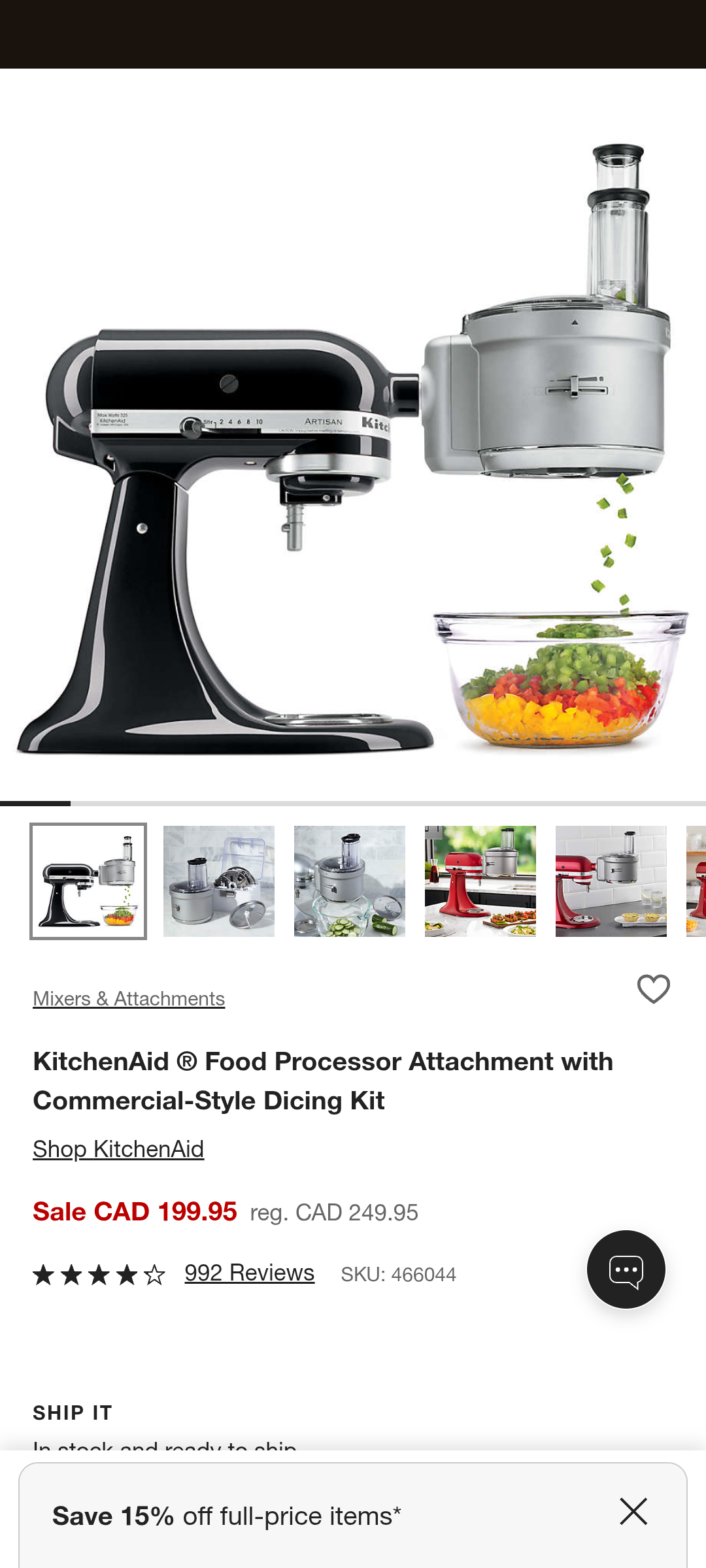
For years, I bought bags and bags of store-bought hashbrowns because my kids loved them and they’re so versatile in many dishes. Then I discovered a dicing attachment for my mixer that works beautifully. I originally bought it to make life easier while prepping hashbrowns for girls’ camp, feeding 150 girls for a week, and it has since become a regular helper for large meal prep days.
It came in especially handy when processing 100 lbs of potatoes for hashbrowns and samosa filling. What I love most is how efficient it is: I simply place a bucket underneath and keep feeding the hopper until the bucket is full. It makes a huge job feel manageable.
The only small drawback is the size of the hopper. It would be nice if it were a bit larger so I didn’t have to cut every potato in half or quarters to fit. Still, that’s a minor inconvenience compared to the time it saves.
My process for hashbrowns is simple: wash, dice, soak for at least an hour in cold water to release excess starch, then blanch-fry in a frying pan until they are just starting to turn golden. It’s similar to blanch-frying the home fries, just on a smaller scale.
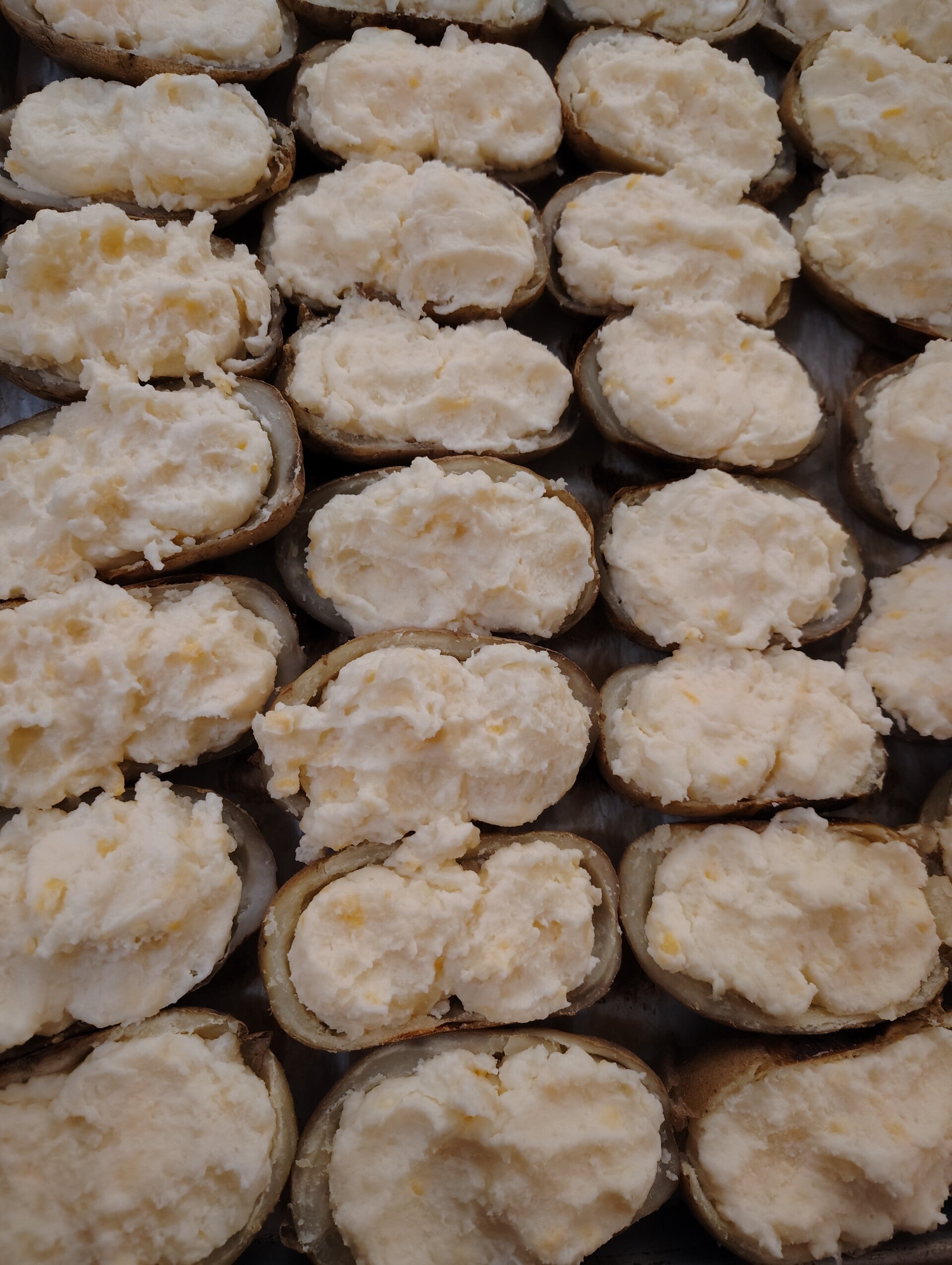
Twice-Baked Potatoes
My kids are all about easy, quick, grab-and-heat meals, and twice-baked potatoes fit that need perfectly. With a filling similar to the one we use for our perogies, they’re a simple, comforting option. The kids can just grab one from the freezer and warm it up in the microwave or air fryer for a snack or a side with their meal.
People often ask, “Why do you bother? Why not just buy them ready-made?” For me, there are a few simple reasons. First, it’s usually more affordable to make them from scratch. Second, I know exactly what goes into them, no surprises, just wholesome ingredients. And third, the look on the faces of those enjoying these homemade dishes is absolutely priceless. Pure bliss.

Perogies
Who doesn’t love a good perogie? My children especially love triple-cheese-filled perogies, so that’s exactly what we made; about 800 of them! It was a bit of a marathon, and by the end I was thinking about investing in a pasta attachment for my mixer. But truthfully, it was such a joy having the kids help out that I wouldn’t trade that time together.
Even my daycare children were fascinated by the pasta maker. They all wanted a turn, so we ended up making a few batches with them as well. They had so much fun turning the handle and watching the dough work its way through. I’m not exaggerating when I say they were entertained for a solid two hours!
By the time lunchtime rolled around, we simply had to cook up some of our freshly made perogies and they were a huge hit. Moments like that, gathered around the table enjoying something we made together, make all the effort completely worthwhile.
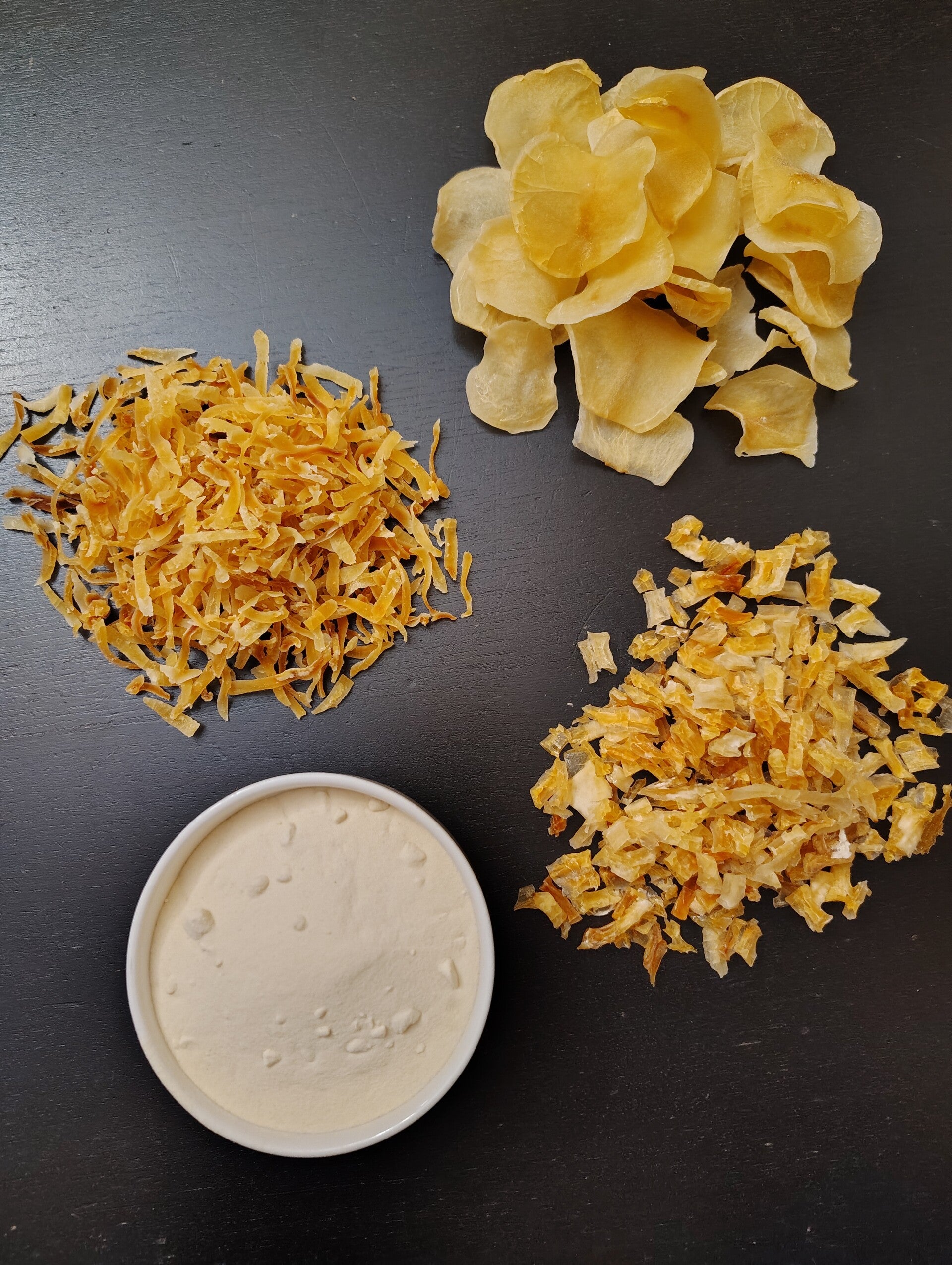
Dehydrated and Freeze-Dried Potatoes
Dehydrated and freeze-dried potatoes have become pantry staples in our home. They are incredibly convenient and help ensure that nothing goes to waste when we have a large quantity of potatoes to process.
Dehydrated potatoes, whether sliced, shredded, or cubed, are perfect for dishes like scalloped potatoes, casseroles, soups, and breakfast hash. Once rehydrated, they cook up beautifully and save so much time on busy days. They’re lightweight, compact to store, and a wonderful way to preserve potatoes for long-term use.
Freeze-dried potatoes, especially mashed, are a favourite in our house. They rehydrate quickly and maintain a texture that is much closer to freshly made mashed potatoes than traditional dehydrated versions. Having jars of freeze-dried mash on the shelf means we can have a warm, comforting side dish ready in minutes.
Both methods extend the shelf life of potatoes significantly while keeping homemade convenience foods within easy reach. It’s a simple way to be prepared, reduce waste, and always have the building blocks of a cozy, nourishing meal on hand.

Potato Starch
While we were processing all of these potatoes, I couldn’t help but notice the layer of potato starch settling at the bottom of the buckets and bowls filled with soaking potatoes. It seemed like such a shame to pour it all down the drain. After doing a little research on potato starch, I thought, why not save it? It’s a natural by-product of the work we’re already doing, and it can be incredibly useful in the kitchen.
Potato starch is a wonderfully versatile ingredient. Once the starchy water settles, the clear water can be poured off, leaving the starch behind to dry. What you’re left with is a fine, natural thickener and binder that can be used in so many comforting, everyday dishes.
Ways to Use Homemade Potato Starch:
-
Thickening soups, stews, and gravies
-
Creating silky-smooth sauces without lumps
-
Adding tenderness to baked goods like breads and cakes
-
Making crisp coatings for fried foods
-
Binding ingredients in veggie patties or meatballs
-
Improving the texture of gluten-free baking
-
Dusting surfaces when rolling dough to prevent sticking
-
Enhancing crispness in homemade fries or hashbrowns
-
Lightly thickening fruit pie fillings and puddings
Saving the starch felt like one more small step toward reducing waste and making the most of every potato we processed. It’s simple, practical, and just another way our pantry continues to grow with wholesome, homemade staples.
Shelf-Life Blurb:
Properly stored dehydrated potatoes can last 10–20 years when kept in airtight containers in a cool, dark place. Freeze-dried potatoes can last even longer, often 20–25+ years, while maintaining better texture and flavor when rehydrated. Either way, they’re a wonderful way to preserve a harvest (or a great sale!) and ensure nourishing, homemade meals are always within reach.
🥔 Best Storage Conditions
- Cool temperatures (around 40–50°F or 4–10°C)
- Dark environment to prevent greening
- Good airflow — avoid sealed containers
- Moderate humidity (not too damp, not bone dry)
- Keep away from onions (they make each other spoil faster)
✅ Signs Your Potatoes Are Still Good to Eat
- Firm to the touch, no mushy spots
- Smooth skin (some minor wrinkles are okay)
- No green colouring on the surface
- Minimal or no sprouts, a few can easily be trimmed
- Pleasant, earthy smell

🚫 Signs It’s Time to Compost Those Potatoes
- Strong or sour odor
- Soft, mushy, or shriveled texture
- Large or numerous sprouts
- Green patches (indicates buildup of solanine, which can be toxic)
- Mold or visible rot
⚠️ Why We Discard Unsafe Potatoes
When potatoes turn green or start to rot, they can produce solanine, a natural toxin that can cause stomach upset (and it doesn’t cook out!). It’s not worth the risk; when in doubt, we compost them and let them return to the earth.
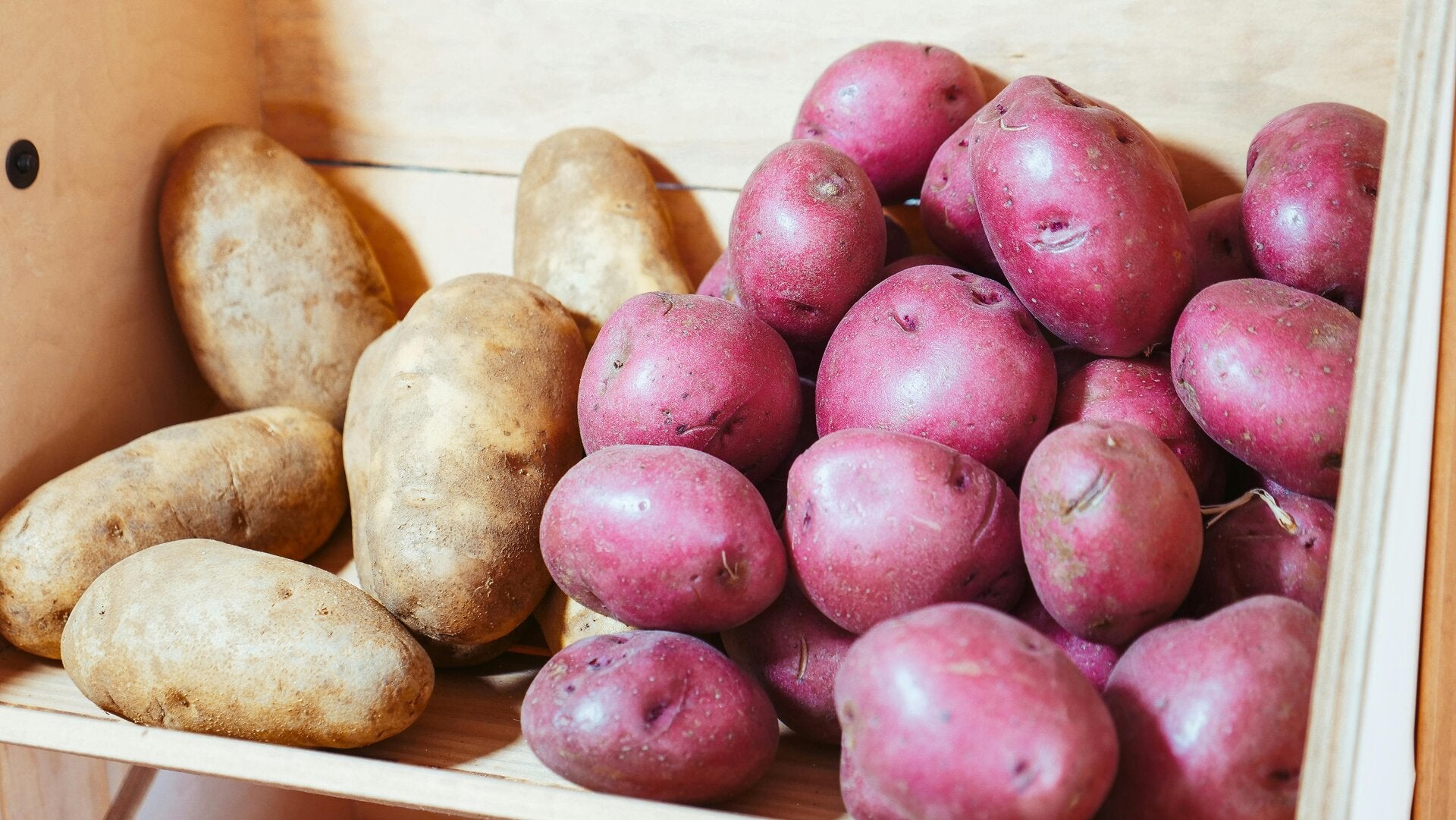
Best Potatoes for Prepping & Preserving
🥔 High-Starch Potatoes (Fluffy & Dry)
Examples: Russet, Idaho
Best for:
- Freezing mashed potatoes
- Freeze-drying mashed potatoes
- Dehydrated potato flakes or slices
- Baked potatoes, perogies, gnocchi
Why they work:
High-starch potatoes have a dry, fluffy interior that rehydrates beautifully. They mash smoothly, freeze well with minimal texture change, and produce light, tender results when freeze-dried or dehydrated. Because they absorb liquid easily, they return to a creamy texture when reconstituted.
Not ideal for: soups or dishes where you want potatoes to hold their shape (they tend to fall apart).
🥔 Medium-Starch (All-Purpose Potatoes)
Examples: Yukon Gold, Yellow potatoes
Best for:
- Samosas and perogies
- Home fries and roasted potatoes
- Freezing cubed or diced potatoes
- Freeze-drying diced potatoes for soups
Why they work:
These are the most versatile potatoes. They have a creamy texture and moderate starch, so they hold their shape better than russets but still mash nicely. They freeze and rehydrate well without becoming overly grainy or mushy.
Great “do-it-all” potato if you’re prepping large batches for mixed uses.
🥔 Low-Starch (Waxy Potatoes)
Examples: Red potatoes, new potatoes, fingerlings
Best for:
- Dehydrated sliced potatoes for scalloped dishes
- Soups and stews
- Hashbrowns (shredded, par-cooked first)
- Freezing diced potatoes for frying later
Why they work:
Waxy potatoes are firm and hold their shape beautifully, even after freezing or rehydrating. They don’t break down easily, making them perfect for dishes where you want visible potato chunks instead of mash.
Not ideal for: fluffy mashed potatoes or freeze-dried mash (they can become gluey).
Best Potato Choice by Preservation Method
Freezing
- Mashed: Russet (light and fluffy after thawing)
- Cubed/Diced: Yukon Gold or Red (holds shape better)
- Shredded Hashbrowns: Yukon Gold or Red (less mushy after thawing)
Tip: Always blanch before freezing to prevent discoloration and texture loss.
Dehydrating
- Slices for scalloped potatoes: Red or Yukon Gold (stay intact)
- Shredded hashbrowns: Yukon Gold (balanced starch)
- Potato flakes: Russet (best rehydration texture)
Why: Waxy potatoes keep structure; starchy potatoes rehydrate softer and fluffier.
Freeze-Drying
- Mashed potatoes: Russet (creamiest rehydration)
- Cubed potatoes for soups: Yukon Gold (firm but tender)
- Diced mixed-use potatoes: Yukon Gold (best overall texture)
Freeze-drying preserves structure extremely well, but starting with the right starch level still makes a noticeable difference in the final dish.
Matching Potatoes to Specific Dishes
- Perogies & Gnocchi: Russet (smooth, fluffy filling)
- Samosas: Yukon Gold (creamy but holds body)
- Home Fries: Yukon Gold or Red (crisp outside, tender inside)
- Scalloped Potatoes: Red or Yukon Gold (slices stay intact)
- Soups & Stews: Red potatoes (don’t fall apart)
- Hashbrowns: Yukon Gold (crispy and cohesive)
- Twice-Baked Potatoes: Russet (light, fluffy centers)
Cozy Pantry Wisdom
If you only want to store one type in bulk for all-around use, choose Yukon Gold. They strike the perfect balance, creamy enough for mashing, firm enough for frying, and sturdy enough for dehydrating and freeze-drying.
But if you’re building a truly well-stocked, waste-free pantry:
- Keep Russets for mash, flakes, and freeze-dried meals
- Keep Yukon Golds for versatile everyday cooking and freezing
- Keep Red potatoes for soups, scalloped dishes, and anything where shape matters
That way, no matter what cozy meal you’re pulling together, from perogies to scalloped potatoes, you’ll always have the perfect potato ready to go.