The Timeless Beauty of Espalier Fruit Trees
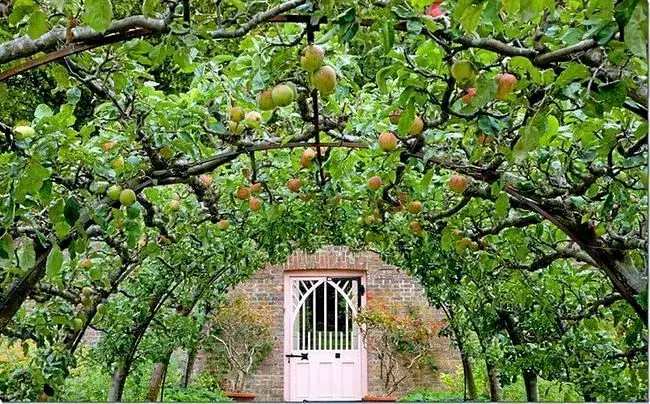
When I was growing up, I loved watching the 1996 version Emma, based on Jane Austen’s classic story. There’s this beautiful scene where Emma walks through a tunnel of apple trees while her friend Harriet runs around catching butterflies. That scene always stuck with me. The gracefully arching branches, heavy with fruit, forming a natural corridor of green, gold and red. It felt like another world, calm and full of life.
Years later, I discovered that those apple trees were trained in a style called berceau, similar to the espalier training system. While espalier is typically two-dimensional, a berceau creates a three-dimensional, walk-through effect. Ever heard of it? It’s an ancient gardening technique of training fruit trees to grow flat against a wall or along a trellis, shaping them into intricate living patterns. The idea started centuries ago to help gardeners grow fruit in small spaces, but over time it has become a beautiful form of living art.
There’s a certain magic to espaliered fruit trees; an old-world charm that feels both elegant and deeply practical, especially for those of us gardening on tiny postage-stamp plots. These beautifully trained trees, with their branches stretched gracefully along a fence or wall, look like something lifted straight from a centuries-old European orchard. Yet they fit so seamlessly into modern small-space living, offering fruit, structure, and beauty without demanding much room.
Why Espalier Is Perfect for Postage Stamp Living
What I love about espalier trees is how practical and pretty they are. You can grow them along a fence or up the side of your house, and they still bear fruit; usually without taking over your whole yard. Apples and pears are the classics, but figs, peaches, and even citrus trees can be trained if you are patient.
It’s not just about saving space. Watching a tree slowly fill out its pattern, branch by branch, is incredible satisfying. Then, when spring blossoms appear or fruit starts to ripen, you can’t help but smile. It’s the perfect blend of structure and nature, a little piece of living art. A simple fence becomes a living tapestry. And a humble apple or pear tree becomes a sculptural feature that changes with the seasons: buds in spring, glossy fruit in summer, glowing leaves in fall, and a stunning architectural silhouette in winter.
Every time I see an espalier tree in bloom, I think back to that scene from Emma. Limited space becomes an invitation to grow creatively. For small gardens, balconies, narrow side yards, or any corner where you want both beauty and usefulness, espaliered trees are a gentle reminder that abundance doesn’t require acreage. Just intention, a little patience, and a love for growing things in beautifully unconventional ways.There’s something so timeless about it; fruit trees forming an archway, inciting you to wander through. It reminds me that gardens aren’t just for growing food; they’re for growing memories too.
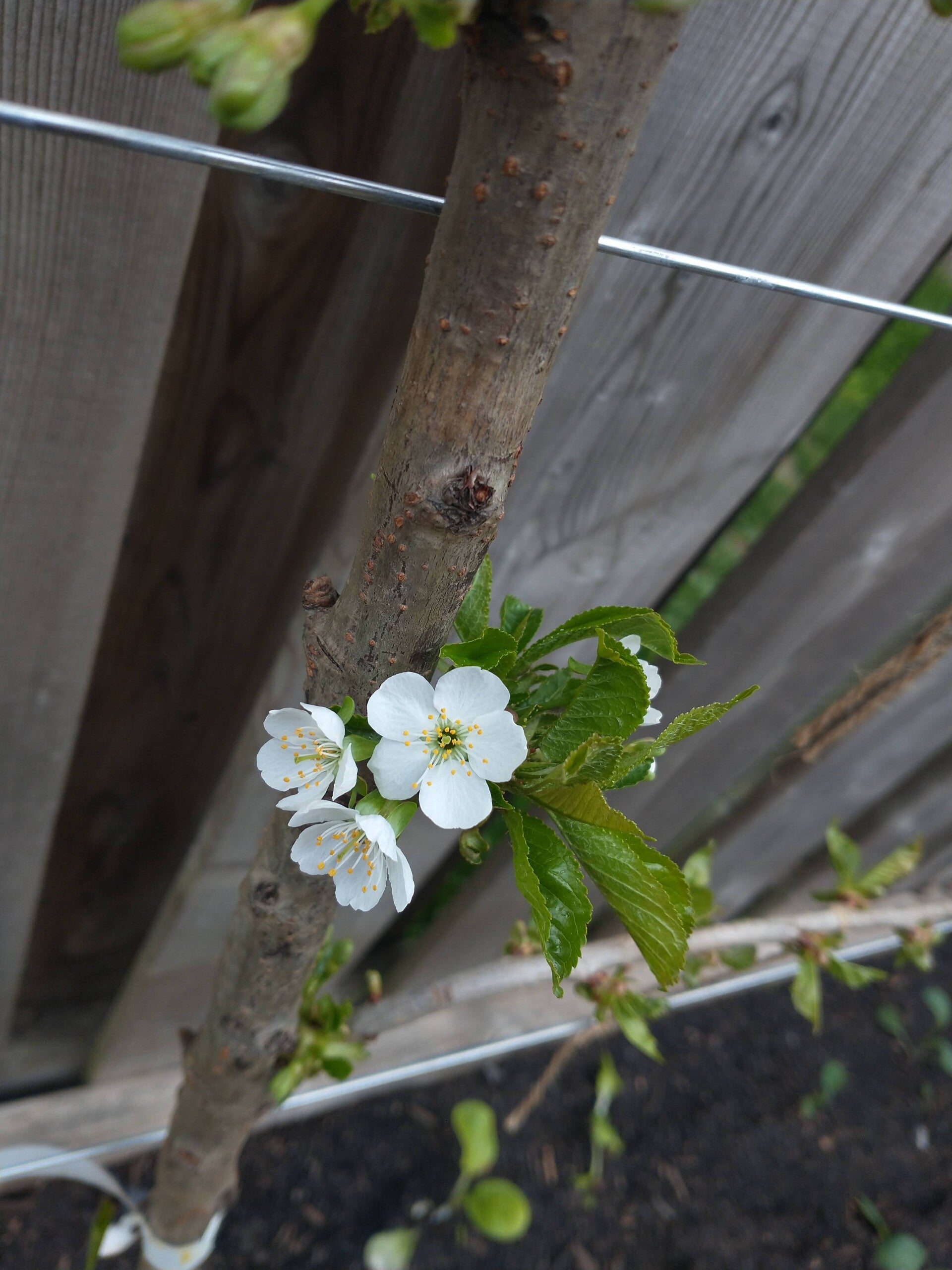
A Fruit Tree in the Space of a Shrub
An espaliered tree gives you all the benefits of a full fruit tree, spring blossoms, fresh fruit, shade, structure, while taking up almost no space.
A single flat plane of branches fits beautifully along:
-
fences
-
walls
-
garages
-
narrow pathways
-
even balcony rails

Beauty & Utility
Espaliers are both productive and ornamental. They look intentional and handcrafted, even though they’re surprisingly simple once you get the hang of the training.
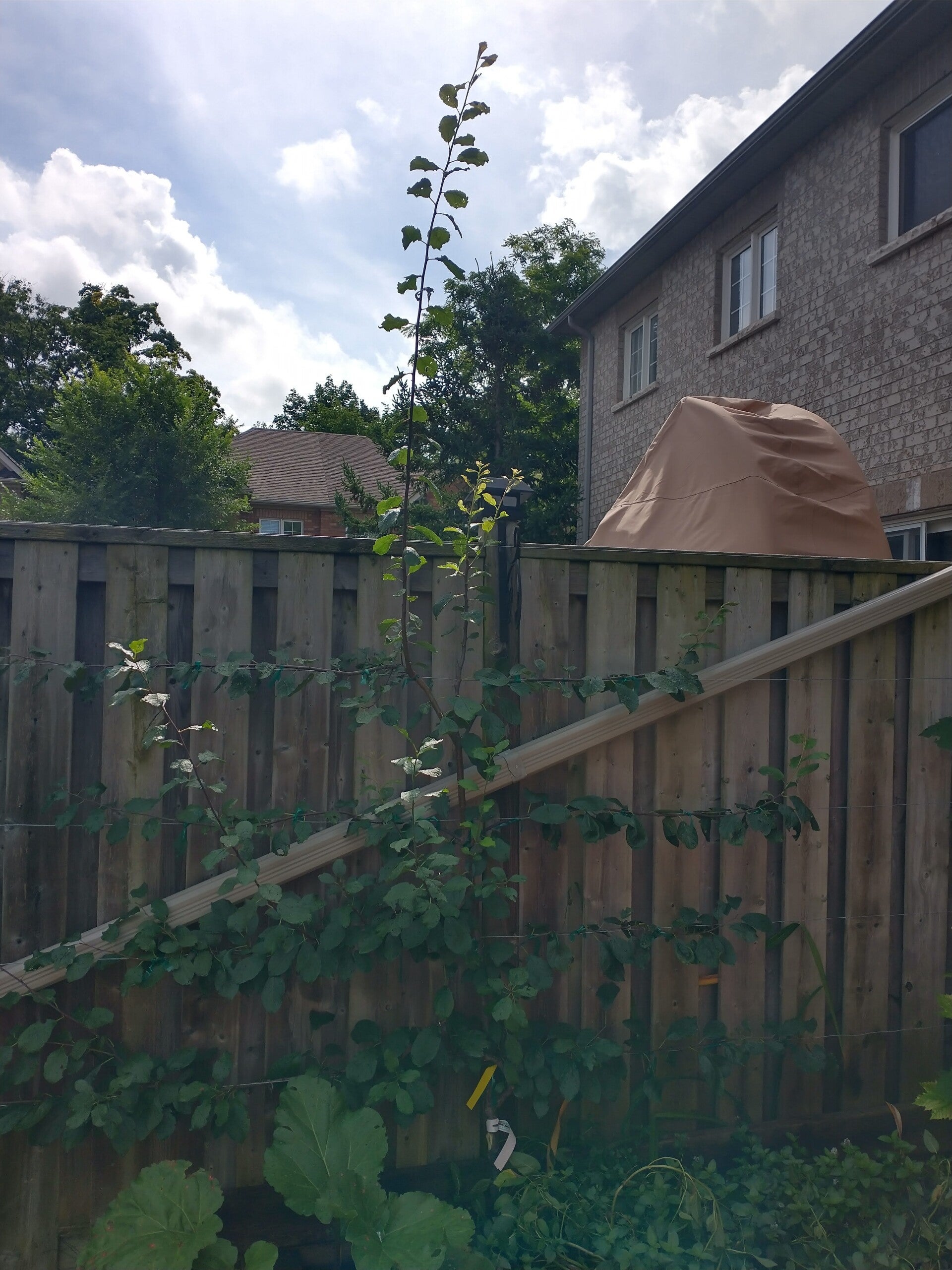
Warmer Microclimates
When grown against a south-facing wall, trees benefit from absorbed heat. This can help borderline varieties thrive in cooler climates, something every northern gardener celebrates.
Best Trees for Espalier
Some fruit trees take to espalier as though they were made for it. Good beginner options include:
-
Apple – The most traditional and easiest to train. Look for spur-bearing varieties.
-
Pear – Graceful and perfectly suited for classic horizontal tiers.
-
Fig – Flexible branches make training effortless.
-
Cherry (sour varieties especially) – Beautiful, though a bit trickier.
-
Plum – Lovely but prefers fan training over strict horizontal tiers.
If you’re new to espalier, apples or pears are the gentlest place to start.


Choosing a Style
Espalier is an art form, but you don’t need to be an artist to enjoy it. A few classic shapes include:
-
Horizontal Tiers
The iconic “ladder” structure most people picture. Neat, symmetrical, timeless. -
Fan Shape
Perfect for stone fruits or more flexible branches, open, romantic, and airy. -
Candelabra
Vertical lines that rise like the arms of a chandelier. Gorgeous in formal gardens. -
Freeform / Artful Espalier
For those who enjoy a looser, more organic look.
Choose a style that matches the mood of your garden. On a postage-stamp plot, even a single espalier becomes a focal point.
Getting Started: A Simple Beginner’s Guide
1. Set Up the Support
Install sturdy horizontal wires or wooden supports about:
-
18 inches above the soil
-
then every 12–18 inches up the height you want
If you’re using a fence, you can attach eye hooks and run wire across, simple and effective.
2. Plant Your Tree
Choose a young whip or a one-year-old tree; they’re the easiest to train. Plant it about 6–8 inches from the wall or fence.
3. Start Shaping Right Away
As the branches grow:
-
Select the strongest lateral shoots for your first tier
-
Tie them loosely to the wire
-
Trim any competing shoots
Espalier training is gentle, more encouragement than force.
4. Prune With Intention
Pruning twice a year keeps the structure tidy:
-
Winter for shaping and structure
-
Summer for maintaining form and encouraging fruiting spurs
Each snip brings you closer to the classic silhouette.
Caring for Your Espaliered Tree
Watering
Young trees need steady moisture; established espaliers are surprisingly drought tolerant.
Feeding
A simple yearly top-dress of compost around the base works wonders.
Patience
Espalier is a slow art. You see progress each season, but the full beauty unfolds over years.
That’s part of the charm; it grows with you.
Harvesting: Small Space, Mighty Yield
One of the sweetest surprises is how productive an espalier can be. Those neatly organized branches are covered in fruiting spurs, meaning even a tiny tree can give you handfuls (or baskets!) of apples, pears, or plums every year.
And there’s something extra satisfying about harvesting fruit from a tree you’ve shaped with your own hands; it’s gardening, craftsmanship, and a bit of legacy all in one.
A Final Word: Beauty, Abundance, and Creativity
On a small plot, every garden choice needs to carry its weight. Espaliered fruit trees do so much more; they carry beauty, usefulness, and old-world romance into even the tiniest spaces.
Whether you lean toward classic symmetry or a more whimsical form, espalier invites you to participate in a gardening tradition centuries old, all while enjoying fresh fruit right outside your door.